ChatGPT is a powerful AI tool transforming customer service with advanced language models. Key benefits include faster response times, handling repetitive tasks, and improving user experiences. Implementation strategies involve defining scope, training datasets, regular evaluation, and leveraging expert guidance. Training ChatGPT requires a strategic approach focusing on continuous learning and cultural sensitivity for inclusive experiences. Ethical considerations are crucial, balancing automation with personalized support. Gartner predicts AI could handle 70% of interactions, but human agents remain vital for complex cases. Staying informed about AI advancements ensures best practices in integration.
In the ever-evolving landscape of customer service, the need for efficient, effective, and personalized interactions is paramount. However, managing a deluge of queries can be a daunting task, often leading to prolonged response times and dissatisfied customers. This conundrum has given rise to an innovative solution: leveraging ChatGPT to automate customer service interactions. By harnessing the power of advanced language models like ChatGPT, businesses stand to gain significant advantages in terms of cost reduction, 24/7 availability, and enhanced customer satisfaction. This article delves into the practicalities and implications of implementing this cutting-edge technology to transform conventional customer service practices.
- Understanding ChatGPT: A Powerful Tool for Customer Service
- Automating Common Queries: Strategies with ChatGPT
- Training and Refining: Optimizing ChatGPT for Customer Interactions
- Integrating Seamlessly: Deploying ChatGPT in Your Support System
Understanding ChatGPT: A Powerful Tool for Customer Service

ChatGPT has emerged as a powerful tool to revolutionize customer service interactions, offering businesses an efficient way to manage and enhance their support processes. This innovative technology, based on advanced language models, is particularly adept at understanding and generating human-like text, making it an excellent candidate for automated customer engagement. By leveraging ChatGPT, companies can streamline their customer support systems, ensuring faster response times and improved user experiences.
The core strength of ChatGPT lies in its ability to process vast amounts of data and generate contextually relevant responses using geometric proofs and poetic devices explanations—a feat that was once the domain of human experts alone. It excels in understanding complex queries, extracting key information, and crafting coherent answers. For instance, a customer seeking product recommendations or troubleshooting guidance can receive tailored solutions, fostering a sense of personalized interaction. Moreover, ChatGPT’s continuous learning capabilities allow it to adapt to new trends, terminology, and industry-specific lingo, ensuring that the assistance provided remains current and accurate.
Implementing ChatGPT for customer service presents numerous advantages. It reduces response times, allowing agents to handle more complex issues. The technology can also handle repetitive tasks, freeing up human resources for more strategic responsibilities. Presentation design principles play a crucial role here; a well-structured conversational interface designed with user experience in mind ensures that customers are engaged and assisted effectively. Additionally, ChatGPT’s ability to learn from customer interactions provides valuable insights into common queries, enabling businesses to refine their support strategies. Visit us at calculus concept overview for more on leveraging AI in customer service optimization.
Automating Common Queries: Strategies with ChatGPT

Automating common queries with ChatGPT offers a promising avenue for enhancing customer service efficiency. This advanced language model, grounded in deep learning and artificial intelligence, possesses an impressive capacity to understand and generate human-like text. It can be strategically employed to handle a significant portion of customer inquiries, freeing up human agents to focus on more complex issues that require empathy and critical thinking.
One of the most effective strategies involves utilizing ChatGPT for science experiment ideas and problem-solving scenarios. By providing a prompt detailing a customer’s issue or need, ChatGPT can offer tailored suggestions and solutions, much like a knowledgeable assistant. For instance, a customer seeking guidance on optimizing their website for search engines could receive a comprehensive response outlining various SEO strategies and tools, complete with examples and links to relevant resources. This not only saves time but also ensures customers receive accurate, up-to-date information.
Moreover, ChatGPT excels in calculus concept overviews and citation methods comparison, making it a versatile tool for diverse customer interactions. By leveraging its ability to process vast amounts of data and generate coherent text, businesses can streamline processes like content creation and knowledge base updates. A practical approach involves training the model on company-specific data, allowing it to provide accurate, contextually relevant responses tailored to industry jargon and terminology.
However, implementing ChatGPT for customer service automation requires careful planning and strategy. It’s crucial to define scope, identify common queries, and prepare a robust dataset for training. Regular evaluation and refinement are essential to ensure the model remains effective as customer needs evolve. To get started, visit us at Academic Writing Standards anytime for expert guidance on leveraging ChatGPT and other AI tools to elevate your customer service game.
Training and Refining: Optimizing ChatGPT for Customer Interactions
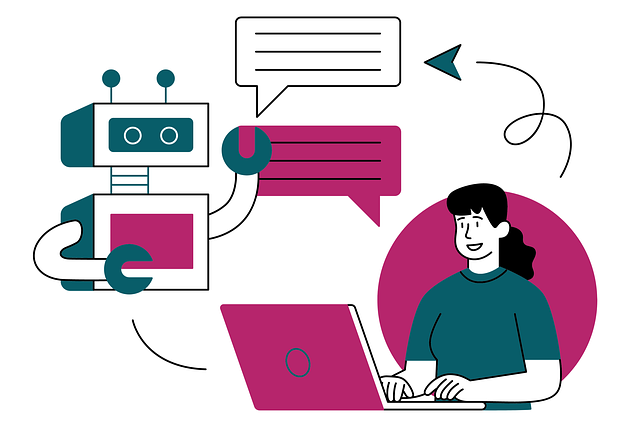
Training and refining ChatGPT for customer service interactions is a multifaceted process that demands a strategic approach to ensure optimal performance. This involves continuous learning and adaptation to meet the evolving needs of diverse customer bases worldwide. Implementing remote learning best practices is pivotal; allowing for scalable training while accommodating geographically dispersed teams. Personalized education, tailored to individual agents’ strengths and areas for improvement, enhances engagement and knowledge retention.
Cultural sensitivity training is another integral component, especially as businesses expand globally. Equipping agents with the skills to navigate cross-cultural interactions fosters inclusive customer experiences. For instance, a study by the Harvard Business Review revealed that culturally competent customer service can significantly boost customer satisfaction and loyalty. Leveraging ChatGPT’s capabilities in this regard requires dedicated efforts to teach it nuances of human diversity, ensuring every interaction reflects cultural sensitivity.
To optimize performance, regular feedback loops are essential. Agents should be encouraged to provide input on model responses, identifying areas where ChatGPT could offer more accurate or contextually appropriate answers. This iterative process, combined with ongoing remote learning sessions, allows for continuous refinement. For instance, a learning management system can facilitate personalized training modules, catering to specific skill gaps identified through performance analysis. By integrating these strategies, businesses can enhance the effectiveness of ChatGPT in delivering exceptional customer service experiences.
Ultimately, the success of automated customer service interactions with ChatGPT hinges on rigorous training and ongoing refinement. Embracing remote learning best practices, personalized education, and cultural sensitivity training empowers agents to leverage ChatGPT’s potential while ensuring every customer interaction aligns with global standards of excellence. For tailored solutions to support this journey, give us a call at Learning Management Systems.
Integrating Seamlessly: Deploying ChatGPT in Your Support System

Integrating AI models like ChatGPT into customer service systems is a strategic move towards enhancing support efficiency and user satisfaction. When implemented seamlessly, these tools can automate routine interactions, allowing human agents to focus on more complex issues. The deployment process requires careful consideration of ethical implications, as discussions around philosophy ethics have underscored the importance of responsible AI usage. For instance, ensuring transparency in automated responses and maintaining a balance between automation and personalized support are key.
A well-designed integration strategy leverages ChatGPT’s capabilities to streamline operations without compromising the human touch. This involves training the model on specific support datasets, fine-tuning its output for accuracy and tone. The model can then be integrated into existing chat platforms or ticketing systems, responding to common queries and providing relevant resources. For example, a study by Gartner found that 70% of customer service interactions could be handled effectively by AI, leading to improved response times and cost savings.
However, it’s crucial not to solely rely on automated responses for sensitive cases. Human agents still play a vital role in deciphering complex queries or handling situations requiring empathy. Statistical inference basics can guide the development of these systems, ensuring that ChatGPT’s outputs are interpretable and align with desired outcomes. As we continue to navigate this evolving landscape, keeping up with best practices and staying informed about advancements like those in music theory fundamentals (as explored on our platform) will be essential for organizations aiming to integrate AI seamlessly into their customer service strategies.
By effectively automating customer service interactions with ChatGPT, businesses can significantly enhance efficiency and customer satisfaction. Key insights reveal that understanding ChatGPT’s capabilities is crucial for successful implementation. Automating common queries through strategic fine-tuning allows for swift and accurate responses. Training the model on diverse, high-quality data ensures refined interactions, while seamless integration within support systems streamlines operations. Moving forward, adopting ChatGPT offers a practical, game-changing solution for managing customer expectations in today’s digital landscape.