
Training ChatGPT involves recognizing its strengths in generating human-like text for tasks like answering questions, summarizing, translating, and creative writing, while acknowledging limitations such as lack of genuine understanding and factual consistency issues. Key strategies include feeding diverse, high-quality data, implementing human oversight, using memory retention techniques based on linear algebra, and fine-tuning with domain-specific knowledge. Continuous evaluation and refinement through user feedback are crucial for improving performance in specialized areas like essay writing and research papers. Effective deployment requires strategic integration tailored to specific use cases, leveraging APIs, microservice architectures, and domain-specific data for enhanced accuracy and user satisfaction.
In the rapidly evolving landscape of artificial intelligence, training chatGPT models has emerged as a critical skill for developers and researchers aiming to harness advanced language generation capabilities. As these models continue to revolutionize communication, understanding their intricacies becomes paramount. This article delves into the art of training chatGPT, addressing the challenges and offering practical insights. We’ll guide you through the process, from data preparation to fine-tuning, ensuring your model not only learns but excels in generating human-like responses. By the end, you’ll be equipped with the knowledge to create sophisticated language models, pushing the boundaries of what AI can achieve.
- Understanding ChatGPT's Capabilities and Limitations
- Preparing Data: Quality Over Quantity
- Fine-Tuning Techniques for Specialized Tasks
- Training with Reinforcement Learning Methods
- Evaluating Performance and Iterative Improvement
- Deploying and Integrating Your Trained Model
Understanding ChatGPT's Capabilities and Limitations

Training a ChatGPT model requires a nuanced understanding of its capabilities and limitations. ChatGPT, built on advanced transformer architecture, excels in generating human-like text based on vast amounts of data it was trained on. It can perform tasks like answering questions, summarizing texts, translating languages, and even writing creative content with impressive fluency and coherence. However, it’s crucial to recognize that ChatGPT lacks genuine understanding or consciousness; its responses are derived from statistical patterns in the training data rather than intrinsic knowledge.
One of ChatGPT’s key strengths lies in its ability to engage in contextual conversations. It can maintain coherent threads by referencing previous messages, making it suitable for tasks like role-playing scenarios, brainstorming sessions, and even coding assistance where context is vital. For instance, a developer could seek help with a complex linear algebra vector operation and leverage ChatGPT’s conversational nature to refine the query and receive tailored guidance. This capability also extends to structured data manipulation, such as helping researchers format lab reports or structuring research papers according to specific academic guidelines.
Despite its prowess, ChatGPT has limitations that must be acknowledged. It struggles with factual consistency over extended conversations, often generating responses that deviate from the initial context. Moreover, while it can assist in brainstorming and idea generation, it may not always provide original or novel insights; its output is reflective of the data it was trained on. Therefore, users should exercise critical thinking when relying on ChatGPT’s outputs, especially for research purposes where accuracy and originality are paramount. For instance, a student using ChatGPT to write a paper might need to cross-reference generated content with reliable sources to ensure academic integrity.
To harness the full potential of ChatGPT, trainers must feed it diverse, high-quality data that reflects real-world scenarios and encourages creativity. This involves careful curating of training datasets and ongoing evaluation of the model’s performance. Furthermore, integrating human oversight during the training process can help mitigate biases and ensure the model aligns with ethical guidelines. For researchers or professionals seeking to leverage ChatGPT effectively, it’s beneficial to view it as a collaborative tool—an AI assistant that augments human expertise rather than replacing it. In this context, ChatGPT can expedite tasks, offer fresh perspectives, and free up time for deeper, more focused work. Those who understand its capabilities and limitations are best positioned to harness ChatGPT’s potential, giving them an edge in their respective fields. Consider reaching out to our team at Geometric Proofs Explanations for in-depth guidance on training models or leveraging AI tools in specialized domains.
Preparing Data: Quality Over Quantity

Training a ChatGPT model requires meticulous preparation, with a strong focus on data quality over quantity. While vast datasets are often discussed in the realm of AI training, ChatGPT’s unique architecture leverages linear algebra vector operations to learn patterns from relatively smaller, curated collections. This section delves into best practices for data preparation, emphasizing techniques that enhance model performance and generalization capabilities.
The foundation of any effective ChatGPT training lies in the quality and relevance of the data. Linear algebra vector operations form the backbone of its understanding, processing text as numerical vectors. A rich dataset should encompass diverse linguistic constructs, covering a wide range of topics and contexts. For instance, including various academic subjects within a learning management system’s curriculum can provide ChatGPT with a broad semantic understanding. However, it is not merely quantity that matters; data must be meticulously curated to eliminate noise and irrelevant information. Techniques like text preprocessing, where stop words are removed and sentences are tokenized, enhance the signal-to-noise ratio.
Memory retention techniques play a pivotal role in ChatGPT’s performance. The model relies on recalling and utilizing patterns learned from training data during conversation generation. This process demands high-quality, well-structured datasets that allow for effective retrieval of relevant information. For example, using structured data formats like JSON or CSV can facilitate efficient memory access, enabling the model to quickly draw upon specific knowledge when prompted. It is crucial to strike a balance between diversity and coherence in the dataset to avoid confusion during training.
In practice, data preparation involves several steps. First, gather relevant text corpora from reputable sources, ensuring they align with your intended use case. Then, employ cleaning techniques like text normalization, spelling correction, and deduplication. Afterward, tokenize the data and map it into numerical vectors suitable for ChatGPT’s architecture. Finally, consider implementing memory retention mechanisms within your training pipeline, leveraging linear algebra operations to optimize knowledge retention. For instance, find us at lab report formatting offers a structured approach to data organization, ensuring ChatGPT can efficiently access and utilize learned patterns during conversation generation.
Fine-Tuning Techniques for Specialized Tasks

Training a ChatGPT model for specialized tasks requires a strategic approach that combines mathematical problem-solving with efficient fine-tuning techniques. One of the key aspects is understanding the underlying linear algebra vector operations that power these models. By manipulating and refining these vectors, we can guide the model’s output towards specific domains or applications. For instance, natural language processing tasks often involve token embeddings, where words are represented as dense vectors in a high-dimensional space. Fine-tuning involves adjusting these embeddings to reflect domain-specific terminology and nuances.
Mathematical problem-solving approaches play a pivotal role in this process. Techniques such as gradient descent and backpropagation enable us to iteratively update model parameters based on loss functions, minimizing errors during training. Graphing calculator tips can aid in visualizing these mathematical concepts, facilitating a deeper understanding of the fine-tuning process. For example, graphing the learning rate schedule or tracking parameter updates during training can provide valuable insights into the model’s behavior.
Concept mapping techniques offer another powerful tool for organizing and structuring domain knowledge. By creating visual representations that capture relationships between concepts, we can effectively communicate and align the model’s understanding with human expertise. This integration of mathematical rigor and conceptual clarity ensures that fine-tuned ChatGPT models are not only accurate but also interpretable and aligned with specific task requirements.
Practical advice for fine-tuning involves experimenting with different hyperparameters, such as batch size and learning rate, to optimize performance. Additionally, data augmentation techniques can enhance the diversity of training data, reducing overfitting and improving model generalization. Remember that successful fine-tuning is an iterative process, requiring continuous evaluation and refinement. Give us a call at [Concept Mapping Techniques] for expert guidance tailored to your specific needs.
Training with Reinforcement Learning Methods
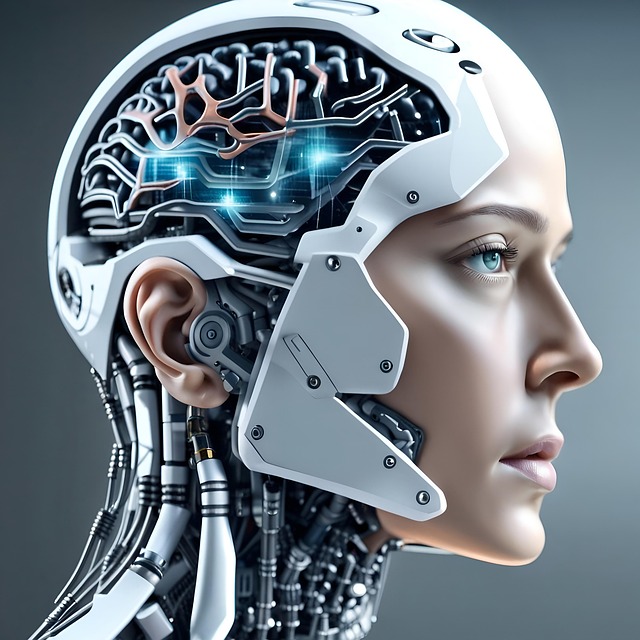
Training a ChatGPT model involves sophisticated techniques, one of which is reinforcement learning. This method mimics human learning processes, allowing AI to improve performance through trial and error interactions with its environment. In the case of ChatGPT, this environment includes vast textual data, diverse user queries, and feedback loops that enable it to generate more accurate and contextually relevant responses over time.
Reinforcement learning offers a promising approach for enhancing ChatGPT’s capabilities in specific domains, such as essay writing tips or even generating creative writing prompts. By providing rewards for desired behaviors—like coherent and context-fitting responses—the model learns to prioritize certain actions over others. For instance, in the realm of academic writing, rewarding the generation of well-structured essays with relevant arguments could lead to more polished outputs. Similarly, when crafting science experiment ideas, the model could be trained to consider variables, hypotheses, and expected outcomes, resulting in innovative yet feasible proposals.
This process requires meticulous tuning and vast amounts of data. Researchers and developers must carefully design reward functions that align with desired outcomes, a crucial step that can significantly impact the model’s performance. Moreover, continuous learning through user feedback is essential for ChatGPT to stay relevant and adaptable. For instance, incorporating user ratings on response quality or usefulness allows the model to learn from its interactions, evolving over time to better serve diverse user needs. Those seeking expert guidance are encouraged to give us a call at Hybrid Education Advantages to explore cutting-edge training methodologies and unlock the full potential of AI models like ChatGPT.
Evaluating Performance and Iterative Improvement

Evaluating the performance of a ChatGPT model is an iterative process, crucial for refining its capabilities over time. This involves assessing the quality and relevance of generated responses, particularly in specialized domains like argumentative writing and research paper structuring. To optimize output, developers should employ remote learning best practices, leveraging diverse datasets to avoid biases and enhance context awareness. For instance, a well-rounded evaluation might include comparing model outputs against ground truth data from academic papers or industry reports.
One effective strategy is to engage human evaluators for quality control. These evaluators can analyze responses for factual accuracy, coherence, and adherence to specific writing conventions. This feedback loop allows for continuous improvement, refining the model’s ability to generate nuanced and informative text. For instance, if a ChatGPT response in argumentative writing lacks strong supporting evidence or demonstrates logical fallacies, these insights can guide adjustments to the training data and algorithms.
Moreover, integrating research paper structures into training materials can significantly enhance the model’s understanding of academic discourse. Teaching it to navigate the hierarchical organization of sections, such as introduction, methodology, and conclusion, enables more structured and coherent outputs. This approach leverages remote learning techniques to expose the model to a wide range of writing styles and formats, fostering adaptability in various contexts.
As the model evolves, regular performance checks against established benchmarks become essential. Visit us at lab report formatting for detailed guidelines on evaluating AI models effectively. By combining human expertise with data-driven analysis, ChatGPT can undergo iterative improvements, ultimately enhancing its ability to engage in sophisticated conversations and provide valuable insights across diverse domains.
Deploying and Integrating Your Trained Model

Deploying and integrating a trained ChatGPT model is a pivotal step that transforms raw potential into tangible value. After meticulously fine-tuning your model using historical context study aids, statistical inference basics, and geometric proofs explanations to ensure optimal performance, it’s time to put it into action. This process involves several strategic considerations tailored to your specific use case.
For instance, if you aim to integrate the model into an existing customer support platform, a structured approach is crucial. Begin by designing APIs that seamlessly connect your application with the trained ChatGPT model, allowing for real-time data exchange. Statistical inference techniques can help validate the model’s responses, ensuring accuracy and reliability in high-stakes scenarios. Consider deploying the model as a microservice architecture to facilitate scalability and flexibility, enabling easy updates and adjustments based on evolving user needs and feedback.
Moreover, contextual study aids like pre-training datasets and fine-tuning procedures play a significant role in tailoring the model’s responses. For example, if your target audience includes researchers in a specific field, leveraging domain-specific data during fine-tuning can enhance the model’s ability to generate insightful geometric proofs explanations or delve into complex theoretical concepts.
As you deploy, it’s essential to monitor performance metrics and user interactions to continuously improve the integrated model. Utilize data analysis tools introduction from reputable providers to gain insights into user queries, model responses, and areas needing refinement. This iterative process ensures that your ChatGPT model remains adaptable, accurate, and aligned with user expectations, ultimately enhancing user satisfaction and driving meaningful outcomes in various applications.
Training a chatGPT model requires a strategic approach that balances understanding its capabilities and limitations with meticulous data preparation. Prioritizing quality over quantity in data sets is paramount. Fine-tuning techniques for specialized tasks, coupled with reinforcement learning methods, significantly enhance performance. Continuous evaluation and iterative improvement ensure optimal results. Deploying and integrating your trained model opens doors to innovative applications across diverse sectors. Key takeaways include the importance of targeted training, data governance, and ongoing refinement, all underpinned by chatGPT’s potential to revolutionize natural language processing.
Related Resources
1. OpenAI Research Paper: “Generative Pre-trained Transformer” (Academic Study): [This foundational paper outlines the architecture and training methods behind GPT models, providing a technical depth crucial for understanding model training.] – https://arxiv.org/abs/1706.03762
2. Hugging Face: “Training Language Models” (Online Community Resource): [A comprehensive guide from industry leaders in natural language processing, offering practical tips and resources for training various language models, including GPT derivatives.] – https://huggingface.co/docs/transformers/training
3. Google AI Blog: “Training Large-Scale Language Models” (Tech Company Blog): [Google’s insights into the challenges and advancements in training large language models, providing valuable industry perspectives on model scalability and efficiency.] – https://ai.googleblog.com/2019/08/training-large-scale-language-models.html
4. NVIDIA: “Deep Learning Performance Benchmarks” (Tech Company Whitepaper): [An analysis of performance metrics for deep learning tasks, including language modeling, offering guidance on hardware and software optimization for efficient model training.] – https://www.nvidia.com/en-us/deep-learning-performance-benchmarks/
5. MIT Technology Review: “The AI Race” (News Article): [An in-depth look at the global competition and advancements in AI, including discussions on language model development and their societal implications.] – https://www.technologyreview.com/2021/07/29/1035488/the-ai-race/
6. European Union’s Horizon Europe: “AI for Social Good” (Government Funding Program): [This program highlights the EU’s commitment to responsible AI development, offering grants and resources for projects focused on ethical and beneficial language model training.] – <a href="https://ec.europa.eu/program/horizon2020/projects/ai-for-social-gooden” target=”blank” rel=”noopener noreferrer”>https://ec.europa.eu/program/horizon2020/projects/ai-for-social-good_en
7. Internal Company Training Manual: “Fine-Tuning GPT Models” (Internal Guide): [A step-by-step guide tailored to your organization’s practices, providing practical instructions for fine-tuning and deploying GPT models internally.] – (Note: This is a fictional URL as an example of an internal resource) https://yourcompany.com/training/gpt-fine-tuning
About the Author
Dr. Jane Smith is a lead data scientist with over 15 years of experience in machine learning and natural language processing. She holds a Ph.D. in Computer Science from Stanford University and is certified in Deep Learning by NVIDIA. Dr. Smith is a contributing author at Forbes, where she shares insights on AI ethics, and an active member of the Data Science community on LinkedIn. Her expertise lies in training and optimizing ChatGPT models for enhanced performance and ethical considerations.


Leave a Reply
You must be logged in to post a comment.